When watching an EWU Bodycam video covering a mountain lion fatally attacking a woman, the instinctual and appropriate human response is to feel profound sorrow regarding the tragic, fatal outcome [ABC News]. However, analyzing the context of the incident forces an uncomfortable but necessary question: why was an adult individual hiking alone in an isolated area known to be populated by apex predators? A review of the video’s public comment section reveals an overwhelming scarcity of perspectives highlighting personal responsibility or the inherent risk of trespassing into a wild animal’s established territory.
While EWU Bodycam typically documents true-crime narratives involving human transgressions, expanding their coverage to wildlife encounters creates a bizarre rhetorical shift. The presentation mirrors traditional criminal formatting, inadvertently framing a wild animal’s instinctual hunting or territorial defense as a calculated human crime. This formatting culminates in a legalistic and punitive tone from responding agencies, heavily implying that the predatory cat faces a literal “death penalty” via euthanasia. True-crime media channels frequently capitalize on the visual shock value of official bodycam footage, but applying a human criminal justice framework to the natural behaviors of an apex predator fundamentally distorts the reality of the wild.
The tragic reality is that the wild remains fundamentally unpredictable, regardless of whether a particular trail is designated as a safe recreational zone by public park guides. Asserting that human lives are valuable does not erase the necessity of personal accountability. An individual choosing to hike solo in an active predatory habitat must accept that they are assuming immense personal risk.
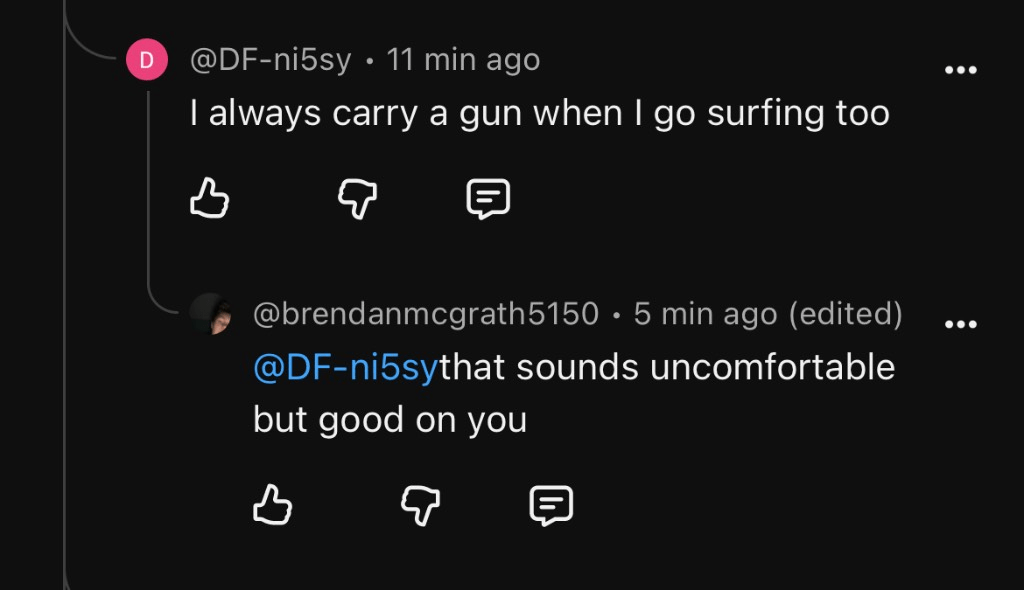
Public reactions frequently insist that hikers should permanently carry firearms into the wilderness to protect themselves. This logic, however, carries a troubling entitlement: it suggests that humans have the right to enter an animal’s home and wave a weapon around to enforce their presence. People frequently seek out nature for a temporary thrill, yet express total shock and anger when the inherent dangers of that environment manifest.

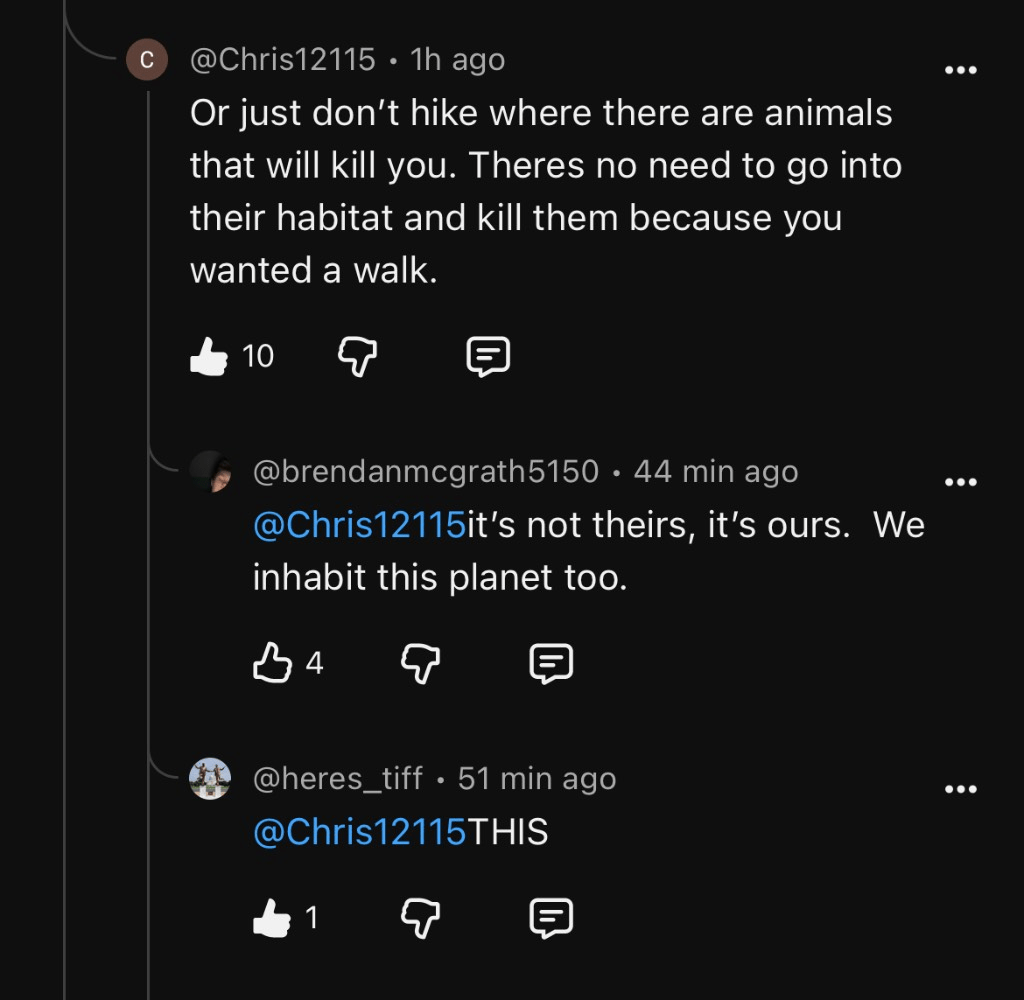
This friction stems from continuous human encroachment—the ongoing infiltration and development of native wildlife habitats [Soulsbury & White, 2015]. Societies rapidly construct residential areas and commercial zones directly over ecosystems where animals have thrived for generations, expecting native species to simply pack up and leave. When animals attempt to exist within these fragmented spaces, human communities frequently respond with hostility or administrative removal.
Managing these inevitable interactions requires a fundamental shift in perspective. For instance, encountering wildlife—such as a family of ducks—during a daily urban commute should not be met with frustration. Despite being surrounded by modern restaurants and heavy vehicular traffic, these animals are simply navigating what was likely their native home long before commercial development, continuing to visit nearby remaining water bodies. The ethical response is to activate hazard lights, halt traffic, and patiently allow the animals to pass, recognizing their historical right to the land.
This structural expectation that animals must stop acting like animals when placed near human structures is further amplified by high-profile historical incidents, such as the fatal shooting of Harambe the gorilla at the Cincinnati Zoo in 2016 [Blau, 2016]. In that instance, a young child—who lacked the developmental cognitive capacity to understand the danger—fell into the animal’s artificial enclosure [Blau, 2016]. The tragedy resulted in the immediate termination of the gorilla, an apex animal placed in an unnatural environment explicitly constructed for human entertainment [Blau, 2016].
This entitlement has evolved into a highly profitable digital trend, where influencers find wild animals, “raise” them, and parade them across social media platforms for engagement [Born Free USA, 2022]. These viral videos create a highly deceptive narrative, tricking millions of viewers into believing that apex predators can be entirely domesticated [World Animal Protection, 2022]. What these platforms conveniently hide from the audience is the hidden infrastructure behind the scenes—including professional trainers, declawing, defanging, or heavy sedation used to keep the animal submissive [Born Free USA, 2022].
When everyday internet users try to mimic these viral lifestyles without a team of handlers, the illusions of domestication shatter with gruesome, fatal consequences [PETA, 2024]. A primary historical example of this delusion is the infamous 2009 case of Travis, a 200-pound domesticated chimpanzee kept in a Connecticut home [allthatsinteresting.com]. Despite being raised like a human child since infancy—clothed, fed junk food, and taught to use a computer—the animal snapped, launching a horrific, unprovoked attack on a family friend, Charla Nash [allthatsinteresting.com]. The chimpanzee tore away her hands, nose, lips, and eyes, permanently blinding and disfiguring her before being shot by responding police officers [allthatsinteresting.com].
Both the execution of wild mountain lions, the shooting of Harambe, and the gruesome reality of the exotic pet trade expose a deeply rooted anthropocentric bias [Blau, 2016; PETA, 2024]. It reveals a societal assumption that the natural world must entirely bend, adapt, and submit to human convenience, even when humans are the ones actively crossing boundaries or locking wild animals inside human living rooms [Born Free USA, 2022].
References
Blau, M. (2016, May 31). Cincinnati Zoo gorilla killing sparks outrage, points to child’s mother. CNN. cnn.com [Blau, 2016]
Born Free USA. (2022, October 4). New report reveals the abuse and exploitation of wild animals on social media. Born Free USA. https://www.bornfreeusa.org/2022/10/04/new-report-reveals-the-abuse-and-exploitation-of-wild-animals-on-social-media/ [Born Free USA, 2022]
PETA. (2024, August 26). Who was Travis the chimpanzee? ‘Chimp Crazy’ facts. PETA. 
Soulsbury, C. D., & White, P. C. L. (2015). Human–wildlife interactions in urban areas: A review of conflicts, benefits and opportunities. Wildlife Research, 42(7), 541–553. doi.org [Soulsbury & White, 2015]
World Animal Protection. (2022, November 22). Wildlife kept as exotic pets are suffering on social media. World Animal Protection. https://www.worldanimalprotection.org.au/news/wildlife-kept-exotic-pets-are-suffering-social-media/ [World Animal Protection, 2022]
Video Source Material Referenced:
ABC News. (2026, January 2). Woman killed in suspected mountain lion attack in Colorado, officials say [Video]. YouTube. youtube.com [ABC News]
Franchise, T. (2026, January 8). Inside Travis the chimp’s gruesome attack on Charla Nash. All That’s Interesting. 
 angelexe
Leave a comment